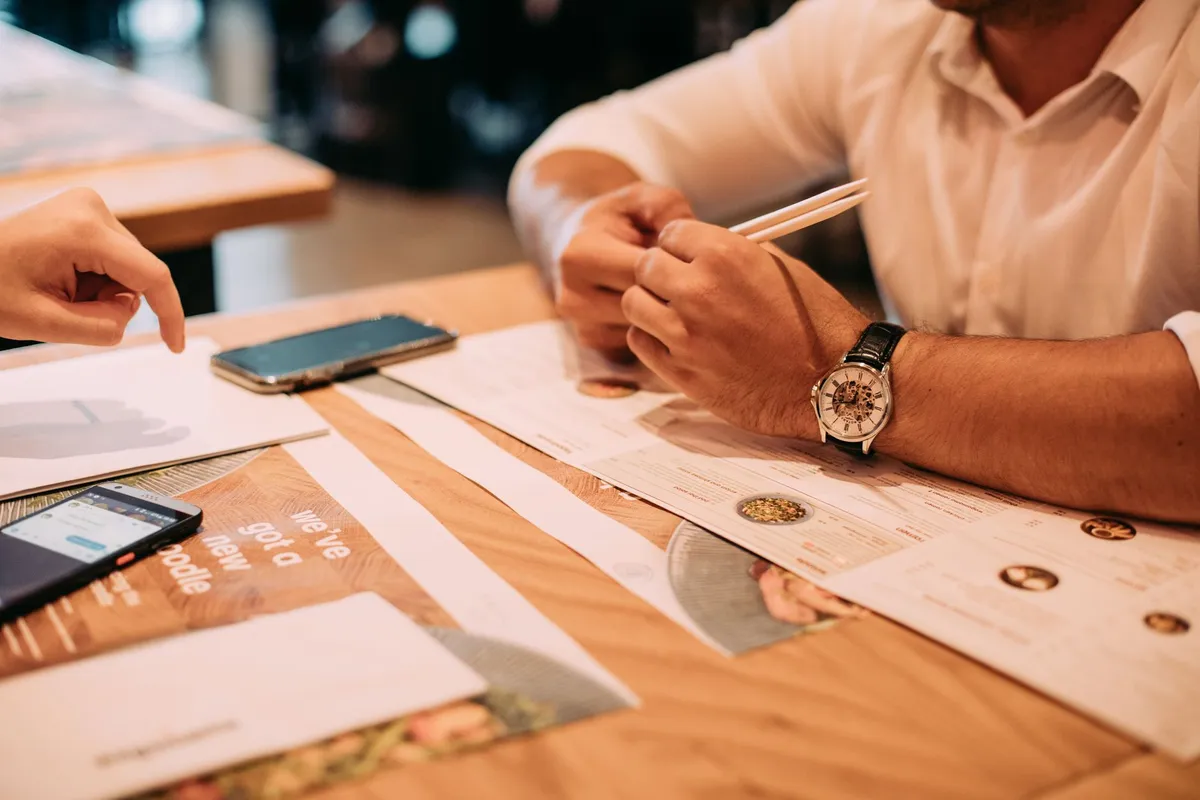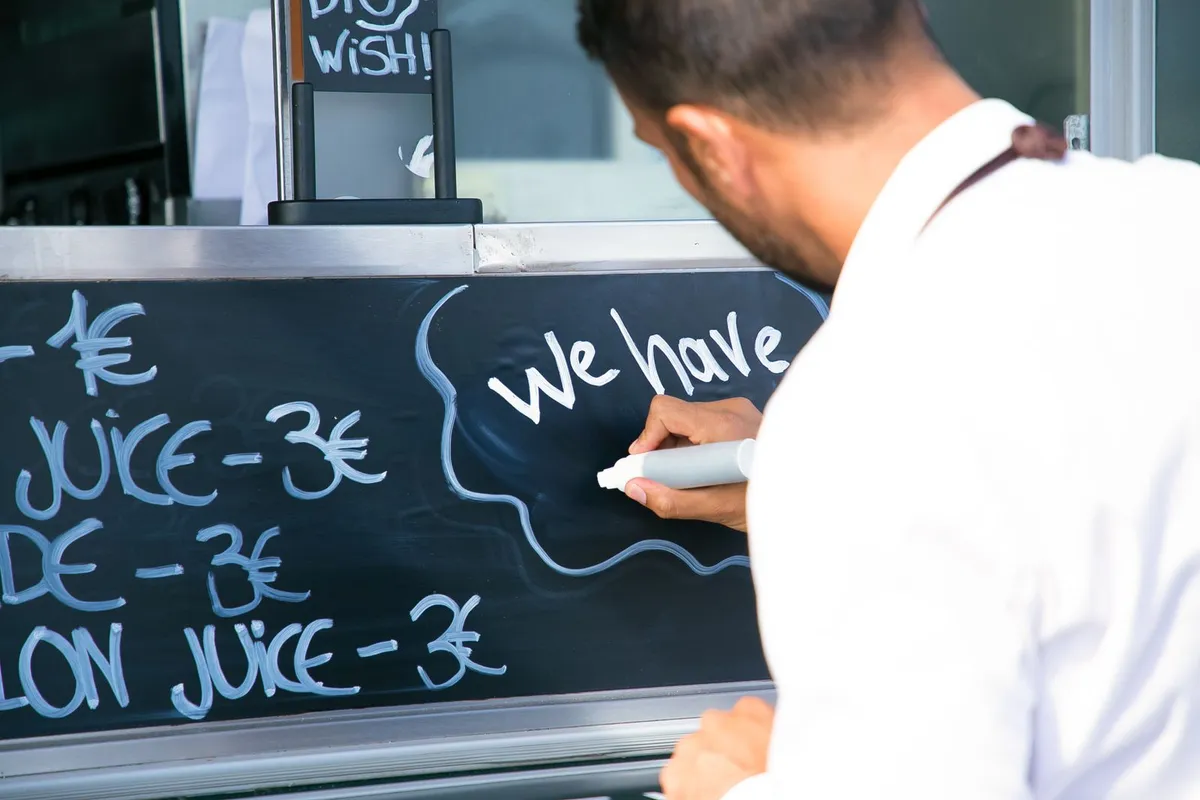
You changed two prices and an invoice showed up. Being charged for every menu change is one of the most annoying habits in this market, and you meet it everywhere: at the print shop, at the designer, even on platforms that promise a digital solution.
September is close and the season change comes with it. Before you pay again, see 6 costs hiding behind every update and how you bring them to zero with a digital QR menu you update yourself, as many times as you want.
Why autumn sends you back to the cash register
From mid September almost everything shifts in the venue. Salads leave, slow cooked dishes arrive, regulars come back. At the same time your costs climb.
Wholesale electricity in Greece went from 73.15 € per MWh in August 2025 to 111.47 € in October, a 52% jump in two months. When costs move that fast, the menu has to follow. And every time it follows, somebody hands you a receipt.
A season change is the moment all these costs land together. New dishes, new prices, a new catalogue. If each one is billed separately, September turns out pricier than you planned back in July.
1. The per change fee hiding in your contract
You usually read it after you sign. Plenty of providers charge for every update during the year, with amounts that look small on the price list and grow in the total.
Do the maths first, not later. Four seasonal refreshes and three price corrections make seven invoices a year. Ask directly: how much does the tenth change cost? If the answer is not zero, your real cost is not what you think.
2. The yearly cap on changes
This is the same problem in a second shape. Instead of a fee you get a ceiling: so many updates a year and no more. Beyond that you pay extra or you wait for the next period.
A ceiling makes you think twice before you correct a price. So the menu stays wrong on purpose, just so you do not spend one of your allowed changes. That cost never shows up on an invoice. It shows up at the table.
So ask the second question too before you sign: is there a cap on updates? A proper digital menu has no reason to set one, because an update costs it nothing. A cap only appears when manual work hides behind the digital solution.
3. The designer for every correction
Even to change one word, somebody has to open the file. At Greek print shops design starts from 20 € per side and budget menus from 2.50 € per piece, so every new round of corrections carries a price.
The heavier cost is time. You send the changes, you wait for a proof, you spot a mistake, you send again. Days, for something that should take two minutes.
4. Reprinting the whole batch
One price changes and you throw away thirty menus. With the prices above, an average batch of 30 copies comes to 75 € for printing plus 80 € for design on a four page menu. That is 155 € for one cycle, and a year holds many cycles.
Paper is not the only culprit. The culprit is that every correction demands a fresh batch. See in detail the hidden costs of menu printing that come back every season.
5. The add-ons billed separately
This is where the sneakiest cost hides. You buy a basic solution and then discover that a second language, the photos or your own logo are add-ons with their own price.
In summer you serve guests from five countries. If each language costs extra, either you pay more or you let the visitor order blindly. With Loudlink the 6 languages, the photos and the branding sit inside the price, with no packages stacked on packages.
6. Your time and the price that no longer applies
The last cost is written nowhere, yet you pay it daily. While you wait for the new print run, the guest reads an old price. The waiter corrects it at the table or, worse, the guest finds out on the receipt.
The same goes for the dish that ran out and stays on the list. The guest picks it, hears "we do not have it" and starts over. See how you raise menu prices without losing guests when your menu updates the same minute.
What a menu change with no fee actually costs
Put the numbers side by side. Two seasonal refreshes a year the old way, at 155 € each, make 310 €. Add one urgent price correction and you pass 400 €, just to keep your menu honest.
Loudlink starts from 9 € per month billed annually, that is 108 € a year. Less than a single reprint, about two iced coffees a week. And the changes are unlimited: prices, dishes, photos, as often as you like, without one extra euro.
See the plans and pricing and compare them with the last invoice from your print shop.
What the digital menu does not do
Let us be clear. Loudlink shows your menu. It does not take orders, it does not hold tables and it does not process payments.
That is a choice, not a gap. We want a tool you learn in ten minutes and update from your phone, not a system that needs staff training before you can change a price.
Frequently asked questions about menu change fees
Four things owners ask us often:
- How many changes can I make? As many as you want, with no cap and no fee per change.
- How fast does the guest see it? Immediately. You hit save and the next scan shows the new price.
- Do I have to reprint the QR? No. The code stays the same, only the content behind it changes.
- Can I do it from my phone? Yes, from wherever you are. You need no computer and no designer.
The verdict
Being charged for every menu change is not a law of nature. It is a business model, and another one exists.
If this year you want to change prices the moment you decide them, start a free 14 day trial, without a credit card and with no commitment.